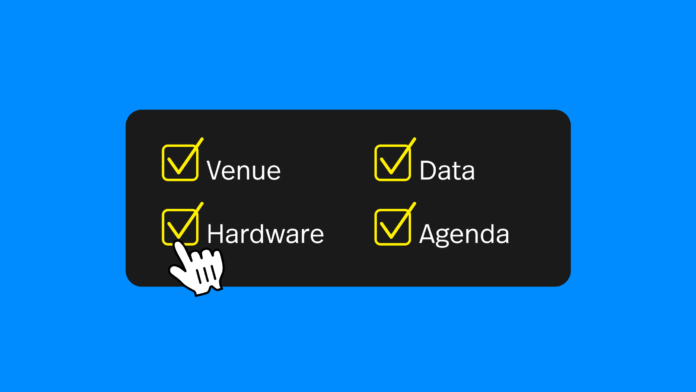
Event day has a unique energy. Months of planning collapse into a few high-stakes hours, and every small detail suddenly matters. Check-in lines feel longer, printers feel slower, and every question seems urgent.
A clear onsite event checklist gives your team something invaluable on event morning: control.
This guide breaks down the 50 most important things to confirm before doors open, organized by timing and function. It is designed for event coordinators, managers, and producers who are responsible for day-of execution and want a practical, no-fluff checklist they can actually use.
Along the way, you will also see where modern onsite technology quietly eliminates dozens of manual checks that used to eat up your morning.
How to use this onsite event day checklist
This checklist is intentionally practical. It is meant to be scanned, copied, adapted, and shared with your onsite team.
Who this checklist is for
- Event coordinators managing onsite logistics
- Event managers overseeing multiple workstreams
- Producers responsible for check-in, badge printing, and staff readiness
- Operations leads supporting large conferences, field events, or roadshows
If you are accountable for what happens between load-in and doors open, this checklist is for you.
How to adapt it to your event size and format
Not every event needs all 50 checks. A 300-person field event may combine roles, while a 10,000-person conference may assign each section to a dedicated lead.
For multi-day events, treat this as a day-one master checklist, then reuse relevant sections each morning. For smaller teams, group items by owner rather than by category.
Pre-arrival checks: 24–2 hours before doors open
These are the confirmations that prevent last-minute surprises.
Venue readiness
- All contracted rooms are unlocked and accessible
- Session rooms match the final rooming list
- Seating layouts align with capacity plans
- Stages, risers, and podiums are safely installed
- AV equipment is powered on and tested
- Wi-Fi credentials are confirmed and shared with staff
- Power access is available in all key areas
- Registration and check-in areas are fully set
Hardware and connectivity checks
- Badge printers are unpacked and connected
- Check-in scanners or tablets are charged
- Kiosks are online and displaying the correct event
- Backup printers are onsite and accessible
- Spare cables, toner, and badge stock are available
- Devices are connected to the correct network
- Offline or failover options are confirmed
Data and badge setup
- Badge templates are finalized and approved
- Attendee types and access rules are correct
- Test check-ins are completed successfully
- Test badge prints look correct and scan properly
- Real-time sync with registration data is verified
Check-in and badge printing checks
Ease of check-in can make or break the attendee experience. In fact, 71% of attendees say ease of check-in can define how they feel about an in-person event .
Check-in stations and flows
- Check-in stations are clearly labeled
- Line flow is intuitive and unobstructed
- VIP, speaker, and staff check-in paths are distinct
- Queue signage is visible from a distance
- Accessibility needs at check-in are addressed
Badge printing tests and contingency plans
- All printers complete multiple test prints
- Backup printers are powered and ready
- Manual badge backup supplies are available
- Staff know when to switch to backup workflows
Staff briefings and escalation paths
- Registration staff understand the check-in flow
- Technical issue owners are clearly identified
- Escalation paths are shared with all leads
Attendee experience checks in public areas
Beyond logistics, these checks ensure the event feels intentional and welcoming.
Signage, wayfinding, and branding
- Directional signage points clearly to registration
- Restrooms, sessions, and key areas are labeled
- Branding is consistent and placed intentionally
Networking and lounge areas
- Lounge seating is arranged and powered
- Charging stations are working
- Wi-Fi coverage extends to networking areas
- App prompts or signage encourage connection
Accessibility and inclusion checks
- Accessible routes are unobstructed
- Quiet or wellness spaces are ready
- Dietary and allergen signage is visible
Sponsors remember how event day feels. These checks protect relationships and revenue.
Booth setup and signage
- Booth locations match the floor plan
- Sponsor signage is accurate and visible
Lead capture tools and logins
- Lead capture devices are tested
- Staff can log in to scanning tools
- Test leads flow correctly into reporting systems
Sponsor-specific expectations and SLAs
- Sponsor walk-throughs are completed
- KPIs and deliverables are reconfirmed
Safety, security, and access control checks
Emergency plans and contacts
- Emergency contacts and procedures are shared with staff
Access control and restricted areas
- Badge permissions are enforced correctly
- Restricted areas are clearly marked
Use this 50-point onsite event day checklist
This checklist is designed to be copied into your run of show, operations doc, or task management tool. Many teams pair it with run of show templates to ensure nothing slips between owners during a busy morning.
Customizable checklist items for your team
Assign each section to a single owner, and require verbal confirmation before doors open. This simple discipline eliminates assumptions and reduces stress across the team.
Tips for using this checklist with your event tech platform
Modern onsite platforms eliminate many of these checks automatically. With a unified onsite event management platform, teams gain real-time visibility into check-ins, badge printing, access control, and device status without manual reconciliation.
When your event registration data flows directly into onsite tools, test prints, access rules, and last-minute registrations no longer require spreadsheets or guesswork. That is how experienced teams reduce risk without adding complexity.
When doors open, your team should feel ready, not reactive. A strong onsite event checklist does more than prevent mistakes, it gives everyone clarity on what matters most in those final hours before attendees arrive.
As events continue to scale and attendee expectations rise, the teams that feel most in control are the ones supported by integrated onsite technology that works quietly in the background.
If you want to see how a unified onsite platform supports every step of event day execution, from check-in to badge printing to access control, request a demo and explore how your team can spend less time checking boxes and more time delivering great experiences.
FAQs: onsite event day checklist
An onsite event day checklist is a structured list of tasks event teams must confirm before doors open, including check-in, badge printing, venue readiness, staff roles, and attendee experience. It ensures nothing critical is missed during the most high-pressure phase of an in-person event.
What should be included in an onsite event checklist?
A complete onsite event checklist should include venue readiness, check-in and badge printing setup, hardware and connectivity checks, staff briefings, sponsor readiness, safety protocols, and access control. The goal is to confirm operational readiness across every attendee-facing touchpoint before arrival.
When should you start using an event day-of checklist?
Event teams should start using their event day-of checklist 24 hours before doors open, then review it again on event morning. Many of the most important checks, such as data sync, badge testing, and device setup, must happen before staff and attendees arrive onsite.
How is an onsite event checklist different from a run of show?
A run of show focuses on timing and sequencing, while an onsite event checklist focuses on readiness and verification. The checklist confirms everything is prepared, and the run of show governs how the day unfolds. Most high-performing event teams use both together.
What are the most important check-in and badge printing checks?
The most important check-in and badge printing checks include printer testing, badge template validation, attendee type and access rule confirmation, backup hardware readiness, and staff escalation paths. These checks help prevent long lines and technical delays at the first attendee touchpoint.
How does event technology support onsite event checklists?
Integrated onsite event technology centralizes registration data, check-in status, badge printing, and access control in one system. This reduces manual checks, eliminates spreadsheet work, and gives teams real-time visibility into what is happening on the floor.