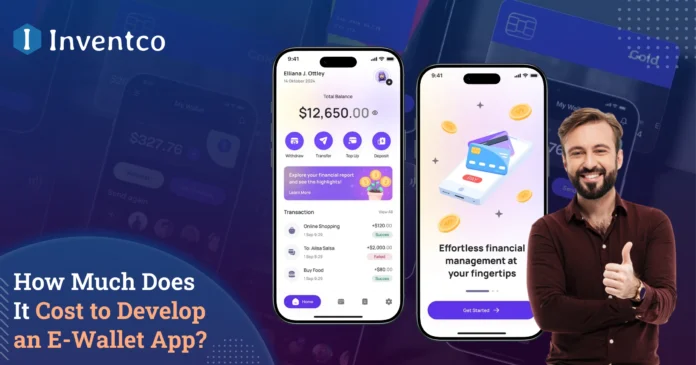
eWallet apps are no longer just a convenience feature, they are core financial infrastructure. From startups to enterprise fintech players, businesses worldwide are racing to launch secure, scalable digital wallets. Naturally, the first question founders and investors ask is: How much does it cost to develop an e-wallet app?
The initial cost of an eWallet app development may range from $10,000 to $100,000+, depending on the specific functionality and platform requirements. As a result, no two businesses have identical app development costs. Furthermore, depending on the app’s complexity and the industry it serves, the aforementioned costs may vary significantly, as will the development expenses.
In eWallet app development, external factors such as security, user interface and experience, ease of navigation, supported payment methods, third-party application integrations, the regulatory environment, and the app’s regional focus significantly influence development expenditure.
This study aims first to understand the complexity involved in the development of the digital wallet application and how its costs are evaluated to provide answers to these questions. In addition to the aforementioned goals, the study will examine the cost-intensive aspects of application development and maintenance, as well as any digital wallet applications tailored to specific industry verticals. Lastly, the study aims to provide useful information for fintech professionals, whether they are just starting a business or scaling their digital wallet operations.
Key Takeaways
- Pricing is determined by the required features, compliance requirements, security requirements, and the system’s scalability.
- The cost of building a wallet app varies depending on the type of app: Basic apps are the most affordable, but for additional features, higher app tiers (mid-level and advanced) will need to be further invested in (as additional features for the app will be required). These higher tiers will also require investment to build trust and reliability.
- Developing a digital wallet app will not be inexpensive, as most of the budget will be allocated to frameworks, regulatory compliance (KYC and AML), and security and compliance costs.
- The choice of platform (iOS, Android, cross-platform, or Native) will affect the budget allocated to wallet app development; native wallets and cross-platform wallets are the most affordable. iOS and Android wallets will be the most expensive.
- Investing in tools and technology that will improve the apps architecture will be of benefit. Investing in the digital wallet’s architecture will enable cost control in the future.
- Have a clear set of goals to optimize costs incurred. Goals will also help you to put the development into stages. Having a set of goals will also help meet user expectations.
Global E-Wallet Market Analysis: Key Numbers Every App Founder Should Know
The eWallet market is booming and the growth and revenue is continuing to grow in 2026, driven by shifting consumer behavior and digital convenience. Here are some market stats of ewallet apps:
- The digital wallet market was valued at approximately $56.77 billion in 2025 and is expected to reach approximately $68.02 billion in 2026, growing at a ~19.8% CAGR, indicating rapid expansion of mobile and eWallet solutions.
- Another projection estimates that the e-wallet industry could grow from roughly $152 billion in 2025 to over $1,120 billion by 2035, with a strong 22% CAGR signaling a long-term investment opportunity.
- Forecasts for the mobile wallet market also indicate strong growth, with estimates exceeding $317 billionin 2026, up from $266 billion in 2025.
How Much Does It Cost to Build an eWallet App?
When building an eWallet app, the business’s first question is how much does it cost to build an eWallet? The answer is that it depends on the type of eWallet you want to build and the target audience. In 2026, development costs for an eWallet app depend on feature depth, security requirements, compliance, platform, and scalability requirements.
For a realistic average development cost, you can develop an e-wallet app for $10,000 to over $100,000. Developing a simple wallet with basic payment functionality will cost far less than developing a digital wallet that offers extensive features, KYC, multi-currency transactions, strong security, and third-party integrations. To simplify this process, let us break down the costs by app development type.
eWallet App Development Cost Breakdown (2026)
| App Type | Estimated Cost Range | Best For |
| Basic eWallet App | $10,000 – $25,000 | Startups & MVPs |
| Mid-Level eWallet App | $25,000 – $55,000 | Growing businesses |
| Advanced eWallet App | $55,000 – $100,000+ | Enterprises & fintech platforms |
1. Basic eWallet App (MVP Level)
A basic eWallet app allows you to customize very little and integrate complex features very sparingly. This tends to be the starting point for most startups testing their ideas or companies entering the fintech industry with little to no risk.
Key Features
- User registration & login
- Wallet balance management
- Peer-to-peer transfers
- Basic transaction history
- Standard security protocols
Cost Range: $10,000 – $25,000. The low cost of developing a digital wallet app makes it well-suited for MVP launches.
USP
- Fast time-to-market
- Building an e-wallet app has a lower cost
- Validating business ideas before scaling is perfect
2. Mid-Level eWallet App (Growth-Ready)
Designed for businesses ready to scale, a mid-level eWallet app supports more users, more transactions, and stronger security. This directly affects the cost of developing an eWallet app.
Key Features
- KYC & user verification
- Multiple payment methods (cards, bank transfer, UPI)
- Push notifications
- Enhanced security layers
- Admin dashboard & analytics
Cost Range: $25,000 – $55,000. This range represents a balanced e-wallet app development cost with strong ROI potential.
USP
- Flexible design
- Greater user trust & compliance
- Optimal feature/cost balance building a digital wallet app
3. Advanced eWallet App (Enterprise-Grade)
An advanced eWallet app is designed to support a high volume of transactions, meet regulatory requirements, and be scalable in the long run. These applications are typical of enterprise fintech solutions and extensive wallet ecosystems.
Key Features
- Multi-currency & international payments
- AI-based fraud detection
- Biometric authentication
- Real-time transaction tracking
- Advanced admin controls & reporting
- Regulatory compliance (PCI-DSS, AML, GDPR)
Cost Range: $55,000 – $100,000+. Here, the costs of developing e-wallet applications are a consequence of the complexity, security, and long-term maintenance required.
USP
- Enterprise-grade security & performance
- Worldwide scalability
- Superior user retention & trust
- Sustained competitive edge despite high e wallet app development costs
The cost of building an e-wallet app in 2026 will depend solely on your objectives. Start with a basic app if speed and testing are crucial. A streamlined, mid-tier wallet is ideal for sustained growth and customer trust. For full-scale global domination in fintech, a premier eWallet app is an ideal choice.
Key Factors That Influence the Cost of Developing an eWallet App
When answering the question, “how much does it cost to develop an eWallet app?” the most precise response would be, “it depends.” This is the case because the cost of developing an eWallet app is subject to various technical, business, and legal compliance factors. Each of these factors affects the overall cost of developing a sufficient eWallet application.
If cost is to be estimated in the planning phase of developing an eWallet application, it is vital to understand these factors. Changes in scope, app features, or the application platform could increase or decrease the cost to develop the app significantly. We will discuss these factors in order, starting with the most important.
Factor 1: Development Platform & Its Effect on Cost
The choice of a development platform will impact the cost to develop the eWallet app significantly. If the eWallet App is developed for iOS or Android, or both, it will impact the development time, resources to be spent, and the cost for maintenance.
Platform Options & Cost Impact
- Single Platform (iOS or Android): Developing on a single platform (Android or iOS) does tend to be the most cost saving and is often selected for MVPs. Development and complete mobile app testing costs for the eWallet app are reduced because code base complexity and app testing are minimized.
- Cross-Platform Development: Cost savings over mobile eWallet app development are realized if businesses use React Native or Flutter to build an app for both platforms. Native development still requires an investment in security testing and performance optimization.
- Native Development (Android + iOS): User experience, security, and performance are maximized by building separate native apps. For mid to advanced-level eWallet solutions, it significantly increases the cost, but is worth the investment.
Cost Impact Summary: Development costs of an eWallet app are impacted by the selection of platform, which can account for 20-30% of total costs.
Factor 2: App Features & Functional Complexity
The functionalities and features of an eWallet app have a direct correlation to the cost of app development. The more customized the features, and the greater the number of functions, the more expensive the app becomes.
Feature Levels & Cost Impact
- Basic Features: While offering users functions such as registration, balance inquiries, P2P transfers, and transaction history retrieval, keep costs low in the developing stage of an e-wallet app and are the best candidates for MVP release.
- Mid-Level Features: Features such as KYC verification, multi-channel payments, and the addition of push notifications, as well as the construction of an admin dashboard, all require more development and testing resources – hence increasing the e-wallet app construction costs.
- Advanced Features: Innovative fraud detection, support for multiple currencies, smart analytics, and loyalty programs all increase the construction costs of an e-wallet app extensively due to the added complexity of the construction as well as the additional requirements in regulatory and security compliances.
Cost Impact Summary: The range and sophistication of features add to the overall costs of an e-wallet app, which in turn adds to the overall time spent on developing an app, as well as the time spent on additional testing and security validation, generally accounting for 25-40% of the costs.
Factor 3: Security & Compliance Requirements
While constructing a digital wallet app, a large portion of the resources allocated to budget construction go towards developing a safe, secured, and compliant digital wallet.
Security Measures & Cost Impact
- Standard Security: The inclusion of safe API, default password, and simple encryption all design cost saving levels to e-wallets in their preliminary stages.
- Advanced Security: Digital wallets will require additional costs to boast features such as biometric login, tokenization, and real time fraud detection and will gain the trust of users.
- Regulatory Compliance: Adhering to PCI DSS, AML, KYC, and other local regulations usually increases the cost of e-wallet app development, especially for international apps.
Cost Impact Summary: Compliance and security standards (KYC, AML, PCI DSS) can constitute 15-25% of a digital wallet app’s total expenditures, particularly for cross-border and high-volume transactional apps.
Factor 4: UI/UX Design & User Experience
User experience is key to retention and adoption and impacts the overall cost of building an eWallet app.
Design Choices & Cost Impact
- Template-Based UI: Using ready-made template user interfaces (UIs) is cost-effective for developing e-wallet apps.
- Custom UI/UX Design: Tailored design, animation, and micro-interaction features improve user engagement and increase development costs. This also builds a stronger brand identity.
- Inclusive Design: Building for a wider range of devices and user abilities takes extra development time, and costs impact the wallet apps design.
Cost Impact Summary: UI/UX design costs are from 10 to 15% of the total cost of developing e wallet apps and vary based on the use of custom and templates based design.
Factor 5: Third-Party Integrations
Numerous eWallet apps use third-party providers for payment processing, identity checks, and notifications. This significantly impacts the cost needed for building an eWallet app.
Integration Types & Cost Impact
- Payment Gateways & Banking APIs: Building a digital wallet app is 5-10% more expensive per integrated payment method, bank transfer, or cross-border payment.
- KYC & Identity Services: Third-party verification is both an additional and ongoing expense for wallet app development.
- Analytics and Notification Tools: Adding real-time alerts and tracking will enhance the functionality of the digital wallet app, but will increase costs.
Cost Impact Summary: Payment gateways, banking APIs, KYC providers, and analytics tools add 10-20% to the cost of a digital wallet app, depending on the complexity and number of integrated tools.
Factor 6: Backend Infrastructure & Scalability
The architecture of the backend significantly affects the costs of developing an eWallet app, as it shapes the app’s capacity to manage user and transaction volumes and to support overall growth.
Infrastructure Choices & Cost Impact
- Basic Backend Setup: This is perfect for small user bases and will keep the costs of developing an e-wallet app manageable.
- Scalable Cloud Infrastructure: While cloud-based systems allow for higher user traffic, it will increase the costs of e wallet app development as it will require more intricate configuration.
- High-Availability Architecture: The costs of a digital wallet app will increase with greater load balancing and real-time syncing, but these features provide greater reliability over the long term.
Cost Impact Summary: Planning for backend architecture and scalability will account for 15-25% of the total development costs of an e-wallet app, particularly for apps that require concurrent and real-time transactions.
Factor 7: Maintenance, Updates & Long-Term Support
Building an e-wallet app is a process, not an event. Post-launch maintenance is an integral component of the costs of eWallet app development.
Maintenance Scope & Cost Impact
- Basic Maintenance: Developing an eWallet app is an ongoing process, but small bug fixes and updates are typically less expensive.
- Regular Updates & Security Patches: To remain compliant, digital wallet apps require frequent updates, which increase overall costs.
- Scalability & Feature Expansion: Adding new features at regular intervals increases costs but significantly enhances the value of eWallet app development.
Cost Impact Summary: Long-term budgeting must include maintenance and updates after launch, which typically fall in the range of 15-25% of the total eWallet app development costs for the first year.
These are some of the major components which define the costs of development of eWallet apps. Understanding the components improves understanding, which helps businesses plan effectively, prioritise features, and build digital wallet apps at a lower cost without compromising quality or security.
Case Study: Escrow Mobile Application by Inventco
Inventco created Escrow Mobile, a mobile application that bridges the trust gap in digital transactions by enabling a more secure escrow process. Inventco seeks to bridge the digital transaction trust gap by building a platform that securely holds the payment until the buyer and seller agree on the conditions that must be fulfilled, and then releases it to the seller. This applies to both the sale of goods and service agreements.
Business Challenge
In digital transactions, buyers and sellers have distinct and often opposing sets of needs. The buyer requires assurance that the payment will not be released. On the other hand, sellers want to ensure that payment is released upon achievement of the milestone. There is a significant gap in solutions that provide flexibility, transparency, and the ability to manage disputes in real time, particularly for milestone projects.
Solution Delivered
Inventco built an escrow-first architecture with:
- Secure third-party fund holding
- Single and milestone-based payments
- In-app document uploads, contracts, and proof of work
- Real-time chat, status tracking, and notifications
- Structured dispute resolution with evidence review
- Encrypted payment processing and audit-ready logs
Results & Impact
- Validation of milestones to decrease disputes
- Improved confidence of buyers and predictable cash flow for sellers
- Closed deals with improved pace and transparency
- Fulfilling compliance for enterprise security for 2026 standards
Why It Matters
This case study is a clear representation of the capability of Inventco in building trust centered digital fintech platforms that deliver clear business results. Selecting the right eWallet app development company is crucial for long-term success and regulatory-ready scalability.
Conclusion
Understanding the cost of developing an e-wallet app in 2026 requires looking beyond surface-level estimates. Costs for the development of an eWallet app are determined by the chosen platform, features, security standards, compliance requirements, and scalability, among other factors. Validation costs are kept with a basic app, while costs are greater with mid-range to advanced solutions, which offer more proven reliability and growth potential.
Establishing precise business objectives enables organizations to manage expenses for developing a digital wallet application while enhancing performance and maintaining user confidence. Balanced feature prioritization, along with considering security and maintenance, allows for optimal cost management. Sustainable digital wallet solutions of the future will always be underpinned by strategic planning.

Jitendra Jain
He is the CEO and Co-founder of Inventco, driving innovation in advanced computing and digital transformation. With deep expertise in modern IT ecosystems, he leads scalable, secure, future-ready solutions. His strategic leadership helps businesses accelerate growth, adopt innovation, and achieve success. You can connect with him on LinkedIn to follow his technology insights.