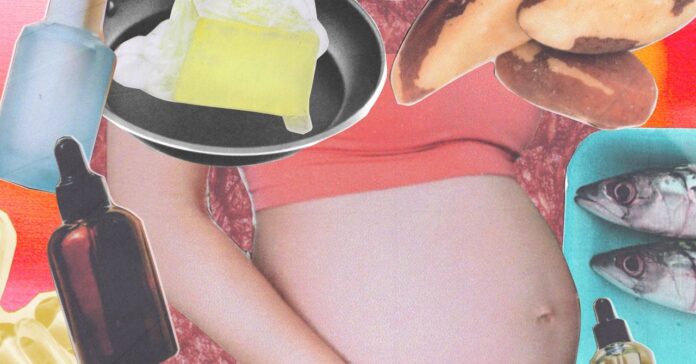
Rohr, as one of 10 children with 29 nieces and nephews, has watched countless family members and friends navigate hard pregnancies. In response, she’s determined to have a positive, empowering one. “I always thought having a baby was, like, the least casual thing ever,” she says. “It just seems like this life-changing thing that I wanted to be super, super sure about.”
Doctors say that, in general, all this new attention surrounding the “zero trimester” is a very positive, exciting development. Healthy moms usually spell better outcomes for mom and baby. Currently, the American College of Obstetricians and Gynecologists recommend doctors ask patients of reproductive age if they plan to get pregnant within the year during checkups. “There’s so many things that we can do to optimize underlying health in that preconception year that will make outcomes in pregnancy better,” says Natalie Clark Stentz, an ob-gyn and reproductive endocrinologist and infertility specialist at Michigan Medicine. This is especially true if you have a chronic health condition, like diabetes, hypertension, depression, or a thyroid disease, that needs to be managed and monitored during pregnancy.
At the same time, that “prep” should be expert-vetted and backed by science, and it usually doesn’t involve the TikTok Shop. A doctor’s preconception toolbox is much simpler than what you might see online, and really hasn’t changed much in decades: ensure vaccinations are up to date, avoid alcohol, stop smoking and taking drugs, start a prenatal vitamin with folic acid to prevent neural tube defects at least a month before getting pregnant, and go through any prescription medications and supplements with your doctor. Only 5 percent of the preconception nutritional claims on social media reviewed in a 2025 study were referred to in current international preconception guidelines, and 54 percent were considered to have “no evidence for the health outcome.” TikTok and Instagram had a higher percentage of “no evidence” claims than other platforms.
For instance, raw milk is a darling of self-proclaimed “crunchy moms,” yet unpasteurized milk can introduce harmful germs like listeria, which can cause a miscarriage or harm a fetus. Extreme diets and exercise can work against your fertility, too, by affecting the hormones that are necessary for conception, says Kara Goldman, an ob-gyn and associate professor of reproductive endocrinology and infertility and director of fertility preservation at Northwestern University. Recently, a patient with a history of estrogen-receptor-positive breast cancer told her she’d been taking beef organ supplements, not realizing until Goldman dug into the ingredients that the capsules included “ovary” and “uterus.” This meant she was inadvertently taking supplemental estrogen after years of avoiding unnecessary estrogen exposure. Additionally, organ meats like liver can be rich in Vitamin A, which Stentz says can be “very toxic” for pregnancy.
“Any buzzy individual thing is likely sensational, whether that’s Brazil nuts, organ meats, or whatnot,” Stentz adds. “The evidence-based things, they’re not sexy. Maintain a normal BMI, stop smoking, pick a boring prenatal vitamin.”
Pregnancy prep regimens can get pricey fast. A month’s supply of Perelel’s “conception support pack,” which includes a prenatal, omega DHA + EPA, and CoQ12 + folate, costs $58.77. A full swap-out of all kitchen Tupperwares, cooking utensils, and pans can run you hundreds. Add on “soft movement” like Pilates, organic produce, a whole new set of makeup and skin-care products, and it becomes all the more expensive.